
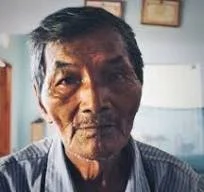
THAI NGOC: A LIFE LIVED WITHOUT SLEEP
BY LUGHANO MWANGWEGHO
Imagine waking up one morning and never going back to sleep — not for one hour, not even for a moment. For most of us, sleep is as natural as breathing, something our body demands each day. Yet this is precisely the unusual life of Thai Ngoc, a farmer from Quang Nam province in central Vietnam who claims he has not slept for more than half a century.
Born in 1942, Ngoc grew up like many others in his village, working the land, planting rice, and raising livestock. His life took an extraordinary turn in his early twenties, during the turbulent years of the Vietnam War, when he suffered a high fever that changed his body’s rhythms forever. After the fever passed, he found that he could no longer fall asleep — not a nap, not a night’s rest, nothing at all.
At first, Ngoc was frightened. Sleep is not only essential for health, it’s something deeply woven into our sense of normalcy. He tried everything — medications, traditional remedies, even alcohol — but nothing brought the sleep he craved. Over time, he learned to accept his condition, not with triumph, but with the quiet resilience that marks much of rural life. Instead of succumbing to exhaustion, he simply adapted.
What makes his story so remarkable is not just the length of time he has supposedly lived without sleep, but how he has continued to live an active, productive life. Neighbors say he tends his fields, carries heavy loads, builds ponds, and helps with community tasks — all without showing the fatigue you’d expect from someone who had truly never rested. Some local doctors who examined him found no serious health problems aside from age-related changes.
Yet despite the intense curiosity his condition has sparked — from journalists, filmmakers, and scientists — Ngoc has remained deeply rooted in his village life. He has declined offers to travel abroad for tests or treatments, preferring the familiar rhythms of his farm over the sterile environment of a laboratory. This choice says as much about Ngoc as the sleeplessness itself: he is not seeking fame or validation, but simply trying to make peace with the life he was given.
For many people who hear his story, the most human part isn’t the mystery of his sleeplessness — it’s the quiet honesty with which he speaks about it. He has said that sometimes he envies others who sleep, that there are moments when he wishes for the gentle escape of rest. Yet each dawn, he rises and continues — not because he must, but because that is how he has learned to live.
THE DARKNESS OF “BOETIE BOER”: STEWART WILKEN AND THE CRIMES THAT SHOOK SOUTH AFRICA
BY LUGHANO MWANGWEGHO
Stewart Wilken, born on 11 November 1966 in Boksburg, South Africa, is one of the most infamous serial killers in South African history. Known widely by the nickname “Boetie Boer” — which roughly translates to “Brother Farmer” — Wilken’s life and crimes reveal the tragic interplay of early trauma, disturbed psychology, and horrific violence. Between 1990 and 1997, he murdered multiple victims in and around the coastal city of Port Elizabeth (now Gqeberha), ultimately receiving several life sentences for his crimes.
Wilken’s early years were marked by hardship and abuse. Shortly after birth, he and his older sister were abandoned by their father in a phone booth — a moment that foreshadowed the instability of his childhood. Rescued by a domestic worker, Wilken was taken into a home where he suffered physical and sexual abuse for an extended period. His sister vanished during that time and was never seen again. Eventually adopted by another family, he grew up in Port Elizabeth, struggling at school and exhibiting violent behavior from a young age. He was exposed to further abuse as a child, experiences that psychologists investigating his later crimes have noted may have shaped the pathology behind his actions.
Wilken’s murder spree was unusual in the grim world of serial killers because he did not confine himself to a single “type” of victim. His known victims included female sex workers and young boys, as well as his own daughter, Wuane, whom he murdered in 1995 when she was only about ten years old. He later claimed that he believed he was somehow protecting her soul after alleged abuse she suffered — a reasoning that horrified investigators and the public alike.
Investigators discovered that Wilken’s actions went far beyond murder. At his trial, evidence and his own statements revealed that he engaged in necrophilia, and he even admitted to acts of cannibalism — such as cutting off and consuming parts of a victim’s body. These aspects of his crimes, along with the emotional detachment he demonstrated in court, led forensic psychologists to describe him as one of the most disturbed offenders they had encountered.
In February 1998, Wilken was convicted on multiple counts of murder and other charges, resulting in seven life sentences — a punishment that the presiding judge said would have been the death penalty had it still been legal in South Africa. His trial brought together testimony and analysis from police investigators and forensic experts, revealing not only the horrific nature of his crimes but also the painstaking work that led to his capture and conviction.

UNRAVELING SISTER ABHAYA’S STORY: LIFE, VANISHING, AND THE STRUGGLE FOR JUSTICE
BY LUGHANO MWNGWEGHO
It was the early morning of March 27, 1992 in Kottayam, Kerala, when Sister Abhaya woke before dawn to study for her exams. A bright, young woman of 21, she lived at the St. Pius X Convent, balancing her religious life with her college studies and hopes for the future. That morning, like so many before, she quietly left her room around 4 a.m. to get a drink of water from the kitchen refrigerator. But she never returned.
Inside the convent, concern spread quickly. A search began, and soon her body was found submerged in a well on the convent grounds. The scene was eerie: a refrigerator door left open, a bottle of water spilled on the floor, one slipper under the fridge with its pair discovered by the well. Shocked, those who found her could only wonder — had Sister Abhaya fallen in by accident, or was something darker at play?
In the earliest hours, the local police ruled her death a suicide, and even the Kerala Crime Branch initially supported that conclusion. But many in the community — including fellow nuns, relatives, and activists — couldn’t accept it. Abhaya had been a vibrant young woman with her whole life ahead of her. Something about the quiet desperation of that tragedy didn’t feel right.
An Action Council for Justice was formed, and a legal battle began. Petitioners took the case to the Kerala High Court, which directed the Central Bureau of Investigation (CBI) to take over the inquiry in 1993. The CBI’s investigation was long, winding, and fraught with false starts — multiple closure reports, conflicting theories, and a seemingly endless search for evidence and truth.
For years, the case dragged on. Evidence went missing, witnesses changed their stories, and frustration grew. At times, the possibility of solving what happened that morning in 1992 seemed to slip further away. Yet through it all, a small but determined group of people kept pushing, believing that Abhaya deserved justice.
Then, in 2008, a breakthrough came. The CBI arrested three people connected with the convent: Father Thomas Kottoor, Father Jose Puthrukayil, and Sister Sephy. According to the agency’s findings, Abhaya had encountered the accused in a compromising situation in the kitchen when she went for water that morning. Fearing that she would reveal what she saw, the CBI alleged the group attacked her with a blunt weapon and dumped her body in the well.
The legal battle continued — slow and painstaking. Eventually, after nearly 28 years of investigation, testimony, and court proceedings, a special CBI court delivered a verdict in December 2020. Father Thomas Kottoor and Sister Sephy were found guilty of her murder and were sentenced to life imprisonment, marking a moment of justice that many had feared might never come.
That verdict was not the end, however. Their sentences were later suspended by the Kerala High Court in 2022 while their appeals are being heard — a development that renewed debate and emotion around the case and underscored how complex and unfinished the story still feels to many.
FOURTEEN LIVES LOST IN THREE HOURS: THE STORY OF HU WENHAI
BY LUGHANO MWANGWEGHO
In the night of October 26, 2001, Hu Wenhai, a 46‑year‑old villager from Dayukou Village in Wujinshan Town, Yuci District, Jinzhong City, Shanxi Province, carried out one of the most shocking mass murders in recent Chinese history. Armed with a double‑barreled shotgun and accompanied by an associate and his younger brother, Hu went on a three‑hour killing spree, systematically targeting people he believed had wronged him in ongoing disputes. During this rampage he shot and killed fourteen villagers and wounded three others in their homes late into the night, firing roughly twenty six shots and attacking multiple households. Those killed included men and women from various families; the victims came from about nine households in the village, and the violence plunged the small rural community into horror and disbelief.
The background to Hu’s actions involved long‑running local disputes over business interests, particularly coal mining rights, and personal grievances with village officials and neighbors. Before the killings, Hu had been involved in the village’s coal‑mining economy, contracting local coal mines and making money, but he lost the right to manage them and repeatedly petitioned authorities over what he saw as corruption and unfair treatment. He also suffered a violent altercation earlier in 2001, leading to injuries that deepened his resentment.
Modern commentary and cultural interpretations — including the 2013 film A Touch of Sin — suggest that Hu’s violent outburst was driven both by frustration with corruption and local power structures and his own sense of injustice and isolation from legal recourse.
The police response was swift: within 24 hours officers apprehended Hu Wenhai and his accomplices, ending the immediate threat to the community. In December 2001, the Jinzhong Intermediate People’s Court tried Hu, his brother, and their ally, convicting them of intentional homicide and related crimes; Hu and at least one accomplice received death sentences, with political rights deprived for life. On January 25, 2002, Hu Wenhai — along with one of his co‑defendants — was executed by firing squad, bringing a swift legal conclusion to a brutal episode that had devastated the village and captured national attention.

BEHIND THE PULPIT: THE MURDERS OF BETTY SCHIRMER AND JEWEL SCHIRMER
BY LUGHANO MWANGWEGHO
At first glance, the lives of Jewel Schirmer and Betty Schirmer seemed ordinary and rooted in faith, family, and community. Both women were wives of a respected pastor, living within church communities that trusted and admired their husband. Yet behind this image of stability and devotion lay a devastating reality. Their deaths, initially explained away as tragic accidents, would later reveal a chilling pattern of violence and deception carried out by the man who had vowed to love and protect them.
Jewel Schirmer was married to Arthur A.B. Schirmer for more than three decades. She was a mother, a wife, and a woman deeply connected to her family and community. In 1999, her life ended suddenly after she was found badly injured at the bottom of the basement stairs in her home. Schirmer told authorities that he had been out jogging and returned to find his wife unconscious. Jewel never regained consciousness and died the next day from severe head injuries. At the time, her death was ruled an accident. Friends and relatives were left to grieve, trusting that what happened was a terrible misfortune—something no one could have prevented.
Almost ten years later, tragedy struck again. Betty Schirmer, Schirmer’s second wife, died in 2008 under circumstances that were once more described as accidental. Betty had complained of pain, and Schirmer said he was rushing her to the hospital when a deer suddenly crossed the road, causing him to crash. Betty’s injuries were fatal. Once again, the story fit a narrative of bad luck and sudden loss. Another woman was gone, and another family was left mourning.
But this time, the details did not sit quietly. Investigators began to look closer, and what they found told a far more troubling story. The damage to the car did not match the violence of Betty’s injuries. Blood evidence discovered in the church garage suggested she had been hurt before the crash. Medical experts concluded that her injuries were consistent with being struck, not with a simple traffic accident. Slowly, the comforting idea of a tragic accident gave way to the possibility of something far darker.
As authorities reexamined Betty’s death, they returned to Jewel’s case. With fresh eyes and improved forensic understanding, investigators concluded that Jewel’s injuries were also unlikely to have been caused by a fall. The realization was painful and unsettling: two women, two deaths, both explained away for years, and both pointing to the same man.
In 2013, Arthur Schirmer was convicted of murdering Betty Schirmer and sentenced to life in prison without parole. In 2014, he accepted responsibility in the eyes of the court for Jewel’s death by pleading no contest to third-degree murder. Though he continued to deny wrongdoing, the legal system concluded that both women had been victims of violence, not fate.
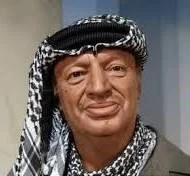
YASSER ARAFAT: THE STRUGGLES, SURVIVAL, AND SECRETS BEHIND HIS DEMISE
By Lughano Mwangwegho
Yasser Arafat was a key figure in Palestinian nationalism from the latter half of the 20th century. He was born in 1929 and became the chairman of the Palestine Liberation Organization (PLO) in 1969, a position he held until his death in 2004. He also led Fatah, the largest faction within the PLO, and served as the president of the Palestinian Authority after the Oslo peace process. Arafat is recognized as an emblem of Palestinian hopes but is also a highly controversial leader in the context of the Israeli-Palestinian conflict.
During his tenure, the PLO embraced armed resistance against Israel, primarily conducting guerrilla warfare during the 1960s and 1970s. These military operations targeted both military and civilian areas, aiming to highlight the Palestinian struggle but often resulting in significant casualties among Israeli civilians. One of the most notorious incidents was the 1972 Munich Olympic massacre, in which eleven Israeli athletes were killed—a tragedy that elicited global outrage, particularly due to Arafat's ambiguous response.
Other violent acts carried out by groups affiliated with the PLO included the 1974 Ma’alot school attack, which took numerous lives, and the 1978 Coastal Road Massacre. Throughout the 1970s and 1980s, assaults on Israeli citizens, including bombings and hijackings, further fueled international criticism of Arafat and the Palestinian movement.
ATTEMPTS ON HIS LIFE AND DEATH
Yasser Arafat was a significant and controversial figure in Middle Eastern history during the 20th century, serving as the leader of the Palestine Liberation Organization (PLO) and later the Palestinian Authority, becoming synonymous with the Palestinian national movement. His tenure was fraught with numerous assassination attempts, and the circumstances surrounding his death in November 2004 remain contentious.
Arafat was targeted early in his leadership by those who perceived him as a significant threat. Israeli intelligence, notably Mossad, orchestrated several attempts on his life, starting in the 1970s. Reports indicate that at least two poisoning plots were initiated, one of which was thwarted because the assigned agent refused to carry out the act on moral grounds. In the years following, especially during the Lebanon conflict, Israeli military operations targeted Arafat and PLO gatherings, but these efforts ultimately failed to kill him. Other plans included shooting down planes thought to transport him, which were abandoned due to potential civilian casualties.
Throughout the 1980s, Arafat acknowledged the dangers to his life, including a public assertion in 1988 that Israeli agents had recently made another assassination attempt, prompting him to enhance his security. While Arafat and his associates claimed he survived many assassination efforts, exact numbers remain disputed.
Arafat passed away on November 11, 2004, at the age of 75 in Paris after experiencing severe health issues. Medical professionals found it difficult to diagnose his rapidly worsening condition, with the official cause of death attributed to a stroke due to disseminated intravascular coagulation (DIC). However, doubts about the true cause persisted. In 2012, Arafat's body was exhumed at the request of his widow, and complex forensic tests revealed high levels of polonium-210, a substance known for its use in poisonings. While the Swiss forensic team did not rule out the possibility of poisoning, French and Russian evaluations were ambiguous, suggesting environmental explanations for the findings.
Many Palestinians interpreted the results as indicative of an assassination, implicating the Israeli government, although no legal action was taken, and Israel denied any involvement. Attempts to reopen investigations in European courts were ultimately unsuccessful, with the European Court of Human Rights upholding that the allegations did not meet the necessary criteria for further legal action in 2021.

THE CAPTURE OF A NAZI: ADOLF EICHMANN'S DOWNFALL
Adolf Eichmann was a senior Nazi SS officer and one of the main organisers of the Holocaust, the systematic genocide carried out by Nazi Germany during World War II. He played a key role in planning and executing the “Final Solution,” the regime’s policy to annihilate Europe’s Jewish population. He attended the 1942 Wannsee Conference where Nazi leaders coordinated the implementation of the Final Solution. After that, as head of a key section in the Reich Security Main Office, Eichmann co-ordinated the identification, deportation and transportation of Jews from across German-occupied Europe to ghettos and extermination camps such as Auschwitz-Birkenau, where most were murdered. He was responsible for organising the deportation of over 1.5 million Jews to killing centres, and in Hungary in 1944 he oversaw the deportation of hundreds of thousands of Jews to Auschwitz.
Following World War II, Adolf Eichmann, a high-ranking Nazi officer responsible for orchestrating the deportation of Jews to concentration camps, was captured by Allied forces but escaped custody in 1946. He traveled across Europe using false identities and eventually settled in Argentina by 1950, living in Buenos Aires as Ricardo Klement. There, he worked in a Mercedes-Benz factory and began a family, evading justice for over ten years.
Israeli authorities and Nazi hunters long pursued him. In 1957, German prosecutor Fritz Bauer discreetly informed Israeli intelligence of Eichmann's presence in Argentina, prompting Mossad to conduct a thorough investigation over the following years. They identified his residence on Garibaldi Street in San Fernando, a Buenos Aires suburb, and secretly photographed “Klement.” Experts matched these images to Eichmann’s wartime records, confirming his identity by recognizing unique physical characteristics.
In early May 1960, a group of Mossad agents arrived in Argentina and began monitoring Eichmann's daily activities. They observed that he took a bus home from work at a consistent time each evening. On May 11, 1960, as Eichmann walked home from the bus stop along a quiet street, the agents acted. Peter Malkin, one of the Mossad agents, confronted him in Spanish, and upon noticing Eichmann’s nervousness, two other agents intervened. They swiftly restrained him after a brief altercation, bundled him into a car, covered him with a blanket, and transported him to a pre-arranged safe house.
Eichmann was held in the safe house for approximately nine days, during which his identity was conclusively verified, and he was interrogated. He ultimately confessed his true identity. Mossad had prepared a fake Israeli passport and an identity for him as an El Al airline employee. On May 20, after sedating him to ensure his composure during the flight, the team secretly boarded him onto an El Al flight disguised with dyed hair and a fake mustache, posing as someone who had suffered a head injury.
On May 23, 1960, Israeli Prime Minister David Ben-Gurion announced Eichmann's capture and confinement in Israel. Argentina condemned the operation as a violation of its sovereignty, and the United Nations Security Council acknowledged the breach of international law while affirming that Eichmann needed to face justice. The diplomatic tension was ultimately resolved through negotiations, though Israel refused to return him.
Eichmann's trial began in Jerusalem in April 1961, becoming the first widely televised trial of its kind. He faced charges of crimes against humanity and war crimes, and his defense of merely following orders was dismissed. In December 1961, he was found guilty and sentenced to death. Eichmann was executed by hanging on May 31, 1962.
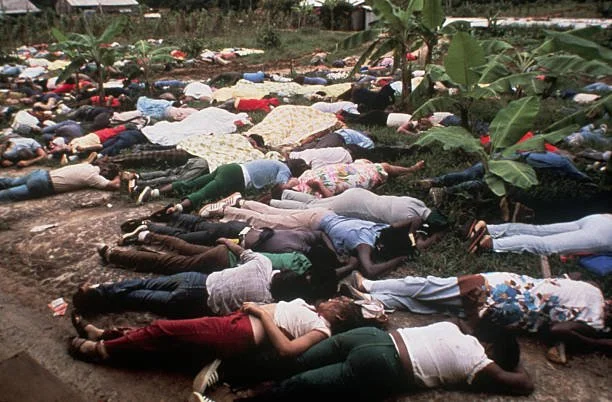
THE JONESTOWN MASSACRE
THE JONESTOWN MASSACRE
Jim Jones was born on May 13, 1931, in Indiana and became a compelling preacher who drew in followers by pledging racial equality, community support, and social justice. He established the Peoples Temple, positioning himself as a defender of the oppressed, though he grew increasingly manipulative, controlling, and obsessed with power.
In the mid-1970s, Jones relocated his followers to a secluded site in Guyana, which came to be known as Jonestown. By late 1978, over a thousand individuals resided there, equipped with cabins, a generator, communal facilities, and basic amenities; however, life there was difficult. Jones became increasingly paranoid, confiscating passports, censoring communication, controlling personal relationships, and punishing those who opposed him. He also conducted “loyalty tests”—mock suicide exercises that conditioned members for what was to come.
As allegations of mistreatment surfaced, family members and former adherents sought assistance from the government, leading U.S. Congressman Leo J. Ryan to investigate. On November 14, 1978, Ryan, along with journalists and concerned family members, arrived. While Jonestown's leaders attempted to create a welcoming atmosphere, several inhabitants discreetly requested assistance to escape. Jones viewed this as treachery and sensed his entire endeavor was crumbling.
On November 18, as Ryan's group readied to leave with defectors, armed guards from the Temple intercepted them at the Port Kaituma airstrip, resulting in the deaths of Ryan, three journalists, and a defector, injuring others.
Back in Jonestown, chaos ensued. Jones assembled everyone in the main pavilion and decreed what he termed a “revolutionary act.” A beverage mixed with cyanide and sedatives was first given to children and infants, followed by adults under armed supervision. Many, having participated in previous drills, initially assumed it was yet another test.
By the following morning, authorities discovered the compound eerily silent, with bodies scattered throughout — parents clutching their children, discarded cups, and syringes everywhere. Jim Jones was found dead from a gunshot wound, presumed to be self-inflicted.
The tragedy at Jonestown resulted in the deaths of 909 individuals, approximately a third of whom were children; when including the victims from the airstrip, the total is often reported as 918. Only a handful survived—some who fled into the jungle, while others were away from the settlement that night.
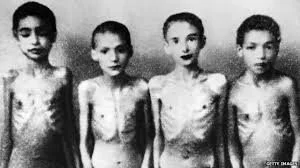
AUSCHWITZ CONCENTRATION CAMP: THE TWIN EXPERIMENT
Written by Lughano Mwangwegho
Known as the Angel of Death Josef Mengele was a German SS doctor infamous for his role at Auschwitz-Birkenau during World War II. Born in 1911 in Bavaria, he earned doctorates in medicine and anthropology before joining the Nazi Party and the SS. Appointed to Auschwitz in 1943, he took part in selecting arriving prisoners for forced labour or immediate death in the gas chambers.
When deportation trains reached Auschwitz-Birkenau, selections happened immediately. Among the exhausted, terrified prisoners, SS doctors searched for twins. Once spotted, children were ripped from their families—often the last moment parents would see them alive. These twins were sent to special barracks under Josef Mengele, where conditions seemed slightly better—cleaner beds, a little more food—but it was no kindness. Every detail was calculated to keep them alive for cruel experiments.
Mengele’s “twin program” began with meticulous documentation: measurements of height, skull, limbs, photographs, X-rays, and plaster casts, all for pseudo-scientific research. Then came invasive procedures: repeated blood draws, cross-transfusions, and injections of infectious or toxic substances. Many fell gravely ill. Surgeries performed without anesthesia involved the removal of organs, sterilization, amputation of limbs, and attempts to join children as conjoined twins.. Eye experiments often caused blindness or permanent injury.
Death did not end the ordeal. When a twin died, autopsies compared their organs with the surviving sibling—and sometimes, the survivor was killed to complete the record. The twin barracks’ seeming privileges were a cruel illusion; they existed only to preserve children for experimentation.
Survivors’ testimonies, like those of Eva and Miriam Mozes, reveal relentless fear and suffering. They watched siblings deteriorate from injections, surgeries, and infections, and entire groups of *Roma twins were executed and dissected in a single day. By January 1945, when Auschwitz was liberated, only about 200 of roughly 1,500 twin sets had survived. Most had died slowly—through mutilation, disease, or starvation. Their suffering remains a chilling testament to the deadly power of pseudoscience, racism, and unchecked medical authority.
Under the regime of Nazi Germany and its collaborators, Roma became one of the groups targeted for genocide. An estimated hundreds of thousands were murdered in concentration camps and mass killings during the holocaust.
* The Roma people trace their origins to north-western South Asia, and their history in Europe is marked by centuries of persecution — often being viewed with suspicion, excluded, expelled or enslaved solely because of their ethnicity and nomadic lifestyle

ISAAC MALIYAMUNGU: A SOLDIER FEARED ACROSS UGANDA
By Lughano Mwangwegho
Isaac Maliyamungu was a Ugandan military officer renowned for being one of Idi Amin's most formidable and trusted lieutenants during Amin's rule in the 1970s. He was born in what is now the Democratic Republic of the Congo to the Kakwa ethnic group, which is the same group as Amin. Maliyamungu later moved to Uganda, where he worked as a gatekeeper at a factory in Jinja district before enlisting in the army. He joined the Uganda Army in 1967 and swiftly advanced through the ranks owing to his allegiance to Amin. In the 1971 coup that facilitated Amin’s rise to power, he played a pivotal role by securing crucial sites, including Entebbe Airport, which contributed to Amin's rapid takeover.
During the Uganda–Tanzania War from 1978 to 1979, he held significant commands as Amin's forces fought against Tanzanian troops and Ugandan rebels; however, the regime ultimately fell. Following Amin's downfall in 1979, Maliyamungu fled to Zaire and then to Sudan, where he reportedly died from suspected poisoning in February 1984.
Isaac Maliyamungu is remembered as one of the most feared and brutal enforcers of Idi Amin’s military dictatorship in Uganda during the 1970s. Though he held no sophisticated political ideology, his name became synonymous with terror, lawlessness, and extreme cruelty. As a senior army officer closely linked to Amin, Maliyamungu used unchecked power to intimidate, torture, and kill, helping to sustain one of Africa’s most violent regimes.
Maliyamungu played a central role in the persecution and mass killing of perceived enemies of the state. After Idi Amin seized power in 1971, soldiers loyal to the deposed President Milton Obote—especially those from the Acholi and Langi ethnic groups—were targeted. Maliyamungu personally supervised arrests and executions of soldiers suspected of disloyalty. Many were taken to army barracks such as Mbarara, Jinja, and Makindye, where they were never seen again. Survivors later testified that detainees were beaten with rifle butts, starved for days, and executed at night, their bodies dumped in forests or rivers to erase evidence.
One of the most infamous atrocities associated with Maliyamungu was his involvement in the murder of Anglican Archbishop Janani Luwum in 1977. Luwum had openly criticized Amin’s regime for disappearances and killings. After being arrested and taken to the State Research Bureau, he was allegedly interrogated in the presence of Amin and senior officers, including Maliyamungu. Although the government claimed Luwum died in a car accident, overwhelming evidence indicates he was brutally beaten and shot. Witnesses later described how his broken body bore signs of severe assault, making the official story a clear fabrication. This killing shocked the world and exposed the regime’s brutality.
Maliyamungu was also notorious for arbitrary killings motivated by personal anger or suspicion. Former soldiers and civilians recalled that he could order executions on the spot, sometimes simply because someone looked at him “the wrong way” or failed to show sufficient fear. In one widely repeated account, detainees were forced to lie down while he paced around them, randomly selecting individuals to be taken away and shot, purely to instill terror among the rest.
Another hallmark of Maliyamungu’s cruelty was his use of psychological terror. Prisoners were often made to listen to the screams of others being tortured, knowing they would be next. Families of suspected opponents were harassed, homes raided, and relatives threatened into silence. In some cases, victims were forced to dig their own graves before being killed, a method designed not just to eliminate enemies but to humiliate and break the human spirit.
Maliyamungu’s violence was also deeply tied to ethnic favoritism and revenge. As a member of the Kakwa group, like Amin, he participated in the elevation of certain ethnic groups within the army while violently purging others. This deepened ethnic divisions in Uganda and left long-lasting scars. Entire communities lived in fear, knowing that a single accusation could lead to disappearance or death.
Despite his central role in these atrocities, Maliyamungu was never held accountable in a court of law. After the fall of Idi Amin in 1979, he fled Uganda and lived quietly in exile.

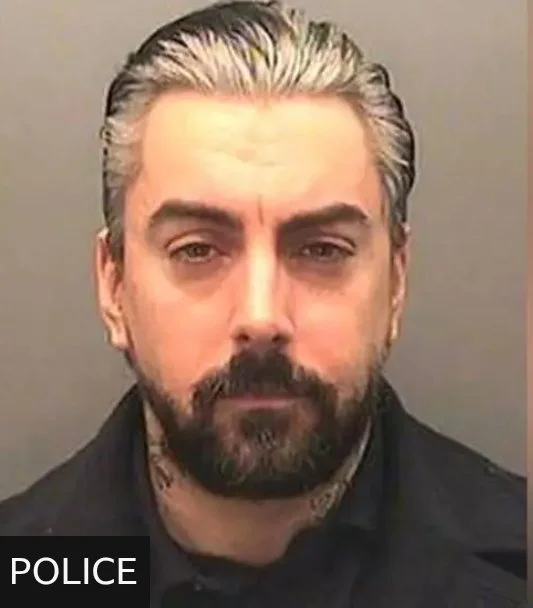
Lost Prophets singer jailed for child sexual abuse killed in prison
Ian Watkins killed in prison


Woman stabs fiances over argument about wedding venue
Stabbing over wedding venue argument


Demetrius Frazier - Scheduled for execution
Demetrius Frazier scheduled for execution by Nitrogen Hypoxia

