
The Final Hours of Muammar Gaddafi
Muammar Gaddafi (1942–2011) was Libya’s leader for more than four decades and one of Africa’s longest-serving rulers. Born into a Bedouin family near Sirte, he rose to power in 1969 after leading a group of young military officers who overthrew King Idris I. He abolished the monarchy and promoted a revolutionary ideology based on Arab nationalism, socialism, and Islam, later outlined in his political manifesto, The Green Book.
Gaddafi introduced a system he called the Jamahiriya, claiming it allowed direct rule by the people, though real power remained concentrated in his hands. His rule combined strict political control with the use of oil wealth to expand education, healthcare, and infrastructure. Internationally, he was a controversial figure, known for opposing Western influence and supporting liberation movements, while later seeking to improve relations with the global community.
On 20 October 2011, the long and tumultuous leadership of Muammar Muhammad Abu Minyar al-Gaddafi, who had ruled Libya since 1969, came to a brutal and controversial end in his hometown of Sirte. After months of intense fighting during the First Libyan Civil War, Sirte became the last major stronghold of Gaddafi loyalists. By mid-October, anti-government forces under the National Transitional Council (NTC) had effectively encircled the city, closing in on the once-unassailable ruler.
In the early hours of 20 October, Gaddafi’s grip on power was collapsing. Determined to escape the siege of Sirte, he and a small group of loyalists—including his son, Mutassim Gaddafi—attempted to flee the besieged city in a convoy of roughly 50 to 75 vehicles laden with weapons, ammunition, and fighters. The convoy set out at dawn along the main road leading westward, likely intending to break through opposition lines and reach safer territory.
At approximately 08:30 a.m., NATO forces supporting the uprising conducted airstrikes on the fleeing convoy. A U.S. drone reportedly fired missiles and French warplanes dropped bombs on several vehicles, destroying key elements of the column and scattering survivors into surrounding terrain. The attacks, intended to weaken armed loyalist groups, halted the convoy and left many fighters dead or wounded.
Although NATO stated it could not confirm Gaddafi’s presence in the targeted vehicles, the airstrikes were a critical turning point in his final hours. After the airstrike, Gaddafi and a small group sought cover. They hid inside a drainage culvert beside a road, attempting to evade detection. Soon after, a group of rebel fighters discovered the hiding place and pulled Gaddafi from his concealment.
Video and eyewitness reports show Gaddafi was alive but badly hurt when he was caught. He had a serious wound on his head and was bleeding. These injuries probably came from the escape attempt and the earlier attacks on his group. After he was taken, his situation got worse. Videos taken by fighters show him being beaten and mistreated by the men who captured him. Some reports say he was even stabbed while he was in their custody. His captors then pulled and dragged him across open ground, and a crowd of fighters stood around, shouting and recording what was happening with their mobile phones.
People do not all agree about exactly how and when Gaddafi died. Some officials from the new Libyan authorities said he was killed by wounds he got during the fighting when he was captured. But human rights investigators have looked at the video and other evidence and say it seems possible he was killed by his captors after he had already surrendered and was unable to fight, which would be a serious violation of the rules of war.
Gaddafi’s son Mutassim was also captured alive that same day. There is video of him walking and talking with his captors, but by the evening his dead body was shown in public, with wounds that were not seen earlier, suggesting he may have been killed while in custody.
After Gaddafi died, his body was taken to the city of Misrata and kept in a commercial freezer, where people took photos and looked at it. Later, amid controversy and calls for investigations into how he died, his remains were buried in an unmarked grave so that the burial place could not be disturbed.
The last hours of Muammar Gaddafi’s life show how his long rule ended in violence and confusion. There are still questions about some details, but the mix of fighting, attacks, his capture, and the way he was treated afterward marked the end of one of North Africa’s most well-known and controversial leaders.
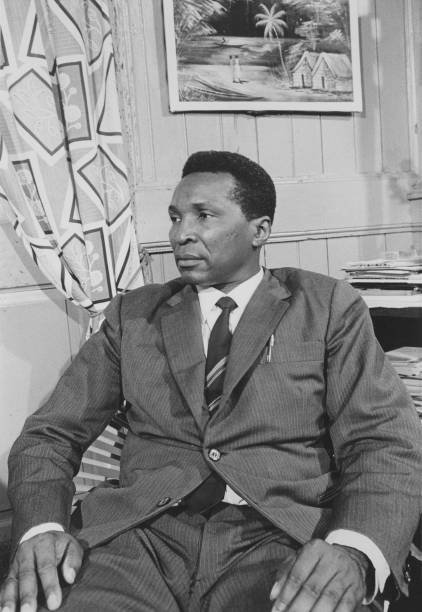
FRANCISCO MACÍAS NGUEMA: THE DICTATOR OF EQUATORIAL GUINEA
In the 1960s, as African decolonization gained momentum, Spain began preparing Equatorial Guinea for independence. Francisco Macías Nguema entered nationalist politics and portrayed himself as a champion of ordinary Africans against colonial domination and elite politicians. He used populist language, promising freedom, dignity, and African self-rule, which appealed strongly to rural voters who felt marginalized.
During the 1968 independence elections, Macías ran for president against Bonifacio Ondó Edu, a more moderate and educated politician favored by Spain. Macías exploited anti-Spanish sentiment, accusing his opponents of being colonial puppets. With support from rural Fang voters – the largest ethnic group in Equatorial Guinea and to which he belonged - and backing from parts of the Spanish administration seeking stability, he won the election. On 12 October 1968, Equatorial Guinea became independent, and Macías became its first president.
The first president of Equatorial Guinea, he ruled from 1968 to 1979. After independence from Spain, many citizens hoped for freedom and development, but Macías quickly turned the country into a state ruled by fear. He eliminated all political opposition and made criticism of the government a crime punishable by death.
THE DESPICABLE ATROCITIES
Francisco Macías Nguema committed atrocities on a scale that devastated Equatorial Guinea and traumatized an entire generation. His rule between 1968 and 1979 was defined by systematic violence, paranoia, and the deliberate destruction of human life, institutions, and culture.
One of the most serious atrocities under Macías was mass murder and extrajudicial executions. Tens of thousands of citizens were killed without trial. People were executed for real or imagined opposition, including civil servants, soldiers, teachers, clergy, students, and ordinary villagers. Executions were often public and staged to spread fear. Victims were forced to confess to absurd crimes such as plotting with foreign powers or practicing witchcraft before being killed. Entire families were sometimes wiped out because one member was suspected of disloyalty.
Macías also ran a regime of torture and arbitrary detention. Prisons such as Black Beach became sites of extreme suffering. Detainees were beaten, starved, and psychologically abused. Many prisoners died from torture, disease, or neglect. Arrests were random and unpredictable, creating a climate in which no one felt safe. Fear became a tool of governance, ensuring silence and obedience.
A particularly brutal aspect of his rule was ethnic persecution, especially against the Bubi people of Bioko Island. Macías viewed the Bubis as political rivals and enemies of the state. Thousands were killed, and many more were forced into exile. This campaign amounted to ethnic cleansing and destroyed communities that had existed for generations. Other ethnic groups were also targeted whenever Macías suspected disloyalty.
Macías deliberately attacked educated people and intellectuals, seeing education as a threat to his absolute power. Teachers, doctors, lawyers, and students were executed or driven out of the country. Schools were closed, books were banned, and even owning certain texts could lead to death. This assault on education crippled the country’s future and left it without skilled professionals.
Religious persecution was another major atrocity. Churches were closed, priests and nuns were murdered or expelled, and Christianity was effectively banned. Macías replaced religion with a cult of personality, presenting himself as a god-like figure. He ordered that prayers be replaced with praise for himself and claimed supernatural powers. This violated freedom of belief and further deepened the atmosphere of fear.
Macías also committed economic crimes and crimes against humanity by deliberately destroying the economy. He expelled or killed foreign workers and professionals, particularly Spaniards, leading to the collapse of plantations, hospitals, and infrastructure. State funds were looted and kept in his private residence, while the population suffered hunger and poverty. Food shortages and disease became widespread, causing many deaths that could have been prevented.
Perhaps most disturbingly, Macías turned against his own family and inner circle. He ordered the execution of relatives, ministers, and senior military officers, convinced they were plotting against him. This demonstrated the depth of his paranoia and ensured that loyalty was based purely on fear, not governance or law.
By the end of his rule, it is estimated that up to one-third of Equatorial Guinea’s population had been killed or forced into exile. The country’s social, educational, religious, and economic systems had been almost completely destroyed. Francisco Macías Nguema’s atrocities stand as a stark example of how absolute power, when unchecked, can lead to extreme cruelty and national ruin.
THE DOWNFALL
Francisco Macías Nguema was overthrown, captured, tried, and executed in a dramatic sequence of events in 1979, brought about by his own brutality, paranoia, and the collapse of state authority.
By the late 1970s, Macías had lost the support of almost everyone, including the army. His rule had destroyed the economy, emptied the country of professionals, and created constant fear even among senior officials. His paranoia became extreme: he ordered mass executions, including members of his own family, and accused military officers of plotting against him. This created deep resentment within the armed forces.
On 3 August 1979, a military coup was launched against him, led by his nephew and trusted lieutenant, Teodoro Obiang Nguema Mbasogo, who was then a senior army officer. Obiang had once enforced Macías’s orders but turned against him after witnessing the scale of executions and fearing for his own life. The coup was swift because many soldiers supported it. Macías’s security forces collapsed, and key installations were taken over with little resistance.
After the coup, Macías fled the capital Malabo and escaped into the forests on the mainland (Río Muni), hoping to hide among loyal supporters. However, he was isolated, disoriented, and increasingly unstable. He carried suitcases containing money, amulets, and charms, believing they would protect him. After several days on the run, he was captured by soldiers loyal to the new regime. Many soldiers reportedly feared executing him themselves because of his reputation for witchcraft and cruelty.
Macías was then put on trial in a military court. The trial exposed the scale of his crimes: mass murder, genocide against ethnic groups (especially the Bubi), economic destruction, abuse of power, and crimes against humanity. Witnesses testified about executions, torture, and disappearances carried out on his orders. He showed little remorse and appeared detached from reality. The court found him guilty on multiple counts and sentenced him to death.
On 29 September 1979, Francisco Macías Nguema was executed by firing squad at the same Black Beach Prison he detained innocent citizens. Notably, foreign soldiers (from Morocco) were used to carry out the execution because Equatorial Guinean troops were reportedly too afraid of him to do it themselves. With his death, one of the most violent and paranoid dictatorships in African history came to an end.
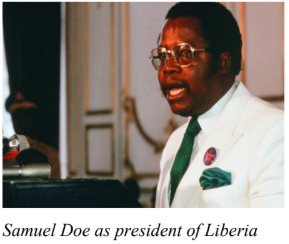
The Rise and Fall of Samuel Doe: A Story of Power and Betrayal
Samuel Doe, the rise and fall